
Skip to content
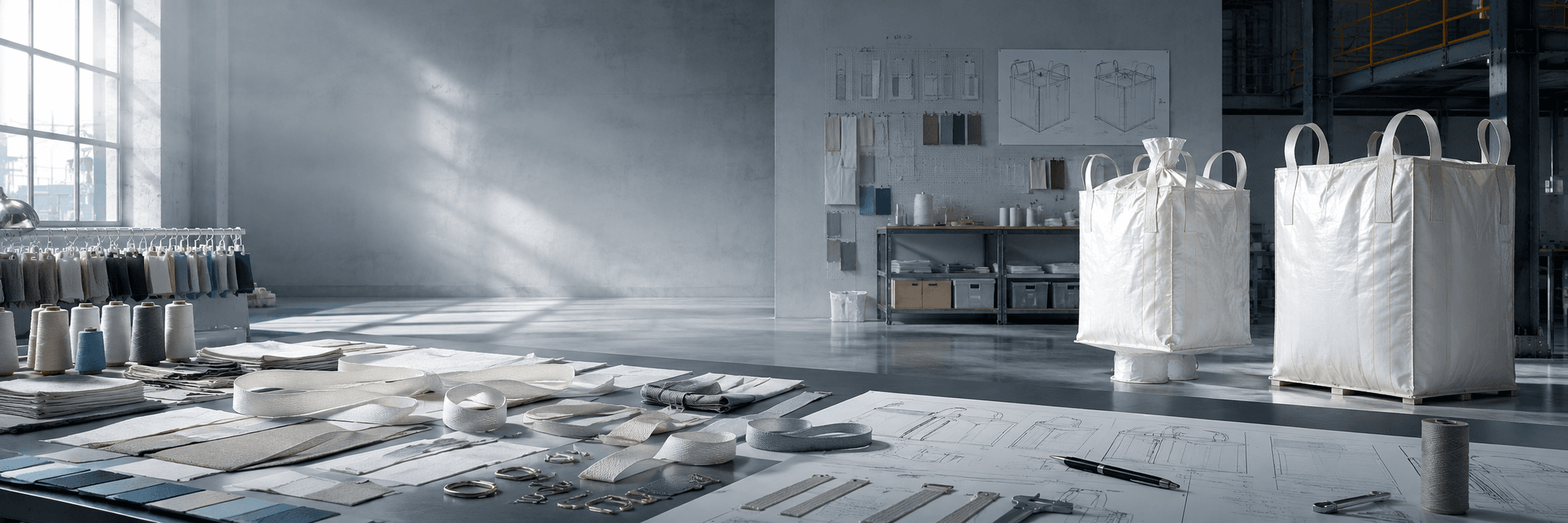
Industrial sewing workshop producing custom FIBC bulk bags

Custom FIBC Solutions

Built Around Your Material and Handling Requirements

Configure Your Requirements

Starting Point

Confirm the operating conditions before choosing the bag

A useful custom FIBC specification begins with three real inputs: the material, the equipment and the logistics route.

  1. 01

    Material profile

    Material name, bulk density, particle condition, moisture range and any containment or cleanliness requirements.

  2. 02

    Filling and discharge equipment

    Filling-head dimensions, discharge method, lifting equipment and the available operating space at both ends.

  3. 03

    Load and logistics route

    Target net weight, pallet or container layout, storage exposure and the expected transport and handling sequence.

Specification Architecture

Turn eight decisions into one workable specification

Each parameter is explained once, with its available range directly underneath, so the complete configuration can be reviewed without repetition.

Final configuration must be confirmed according to material properties, bulk density, filling method, lifting method and transportation conditions.

01

Load and bag dimensions

Define how much the bag carries, then fit its volume to the material, pallet and container layout.

Safe Working Load (SWL)

The load the bag is designed to carry. Choose from standard ratings or a customized load based on your bulk material.

Available range

  • 500 kg
  • 1000 kg
  • 1500 kg
  • 2000 kg
  • Other customized load
Bag Size

Bag dimensions are set around your material, pallet and container layout.

Available range

  • Common industrial sizes
  • Custom dimensions
02

Filling and discharge interfaces

The bag top and bottom must match the equipment at the shipping and receiving ends.

Top Structure

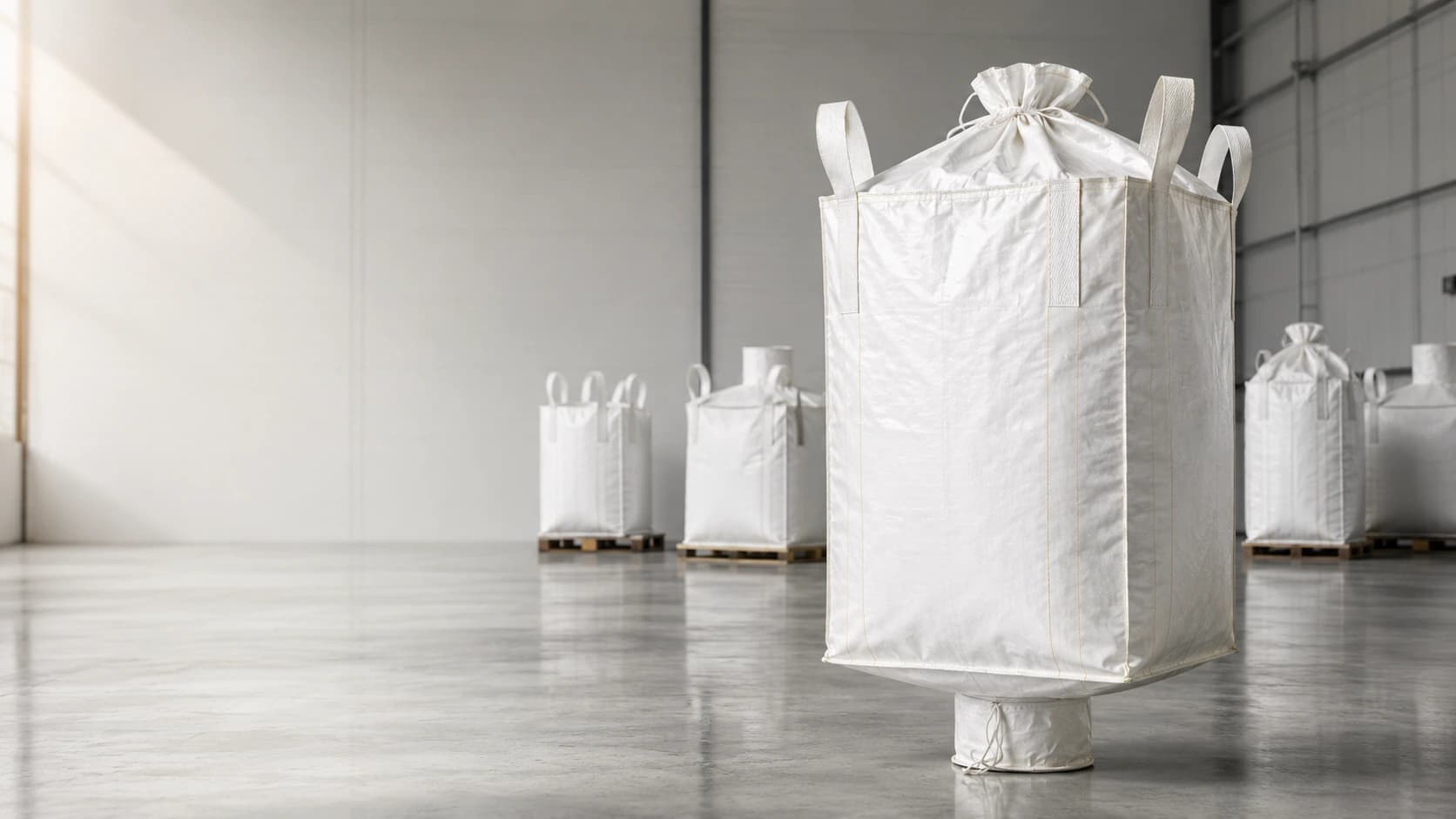
Open top, duffle top or filling spout, depending on your filling line.

Available range

  • Open Top
  • Duffle Top
  • Filling Spout
Bottom Structure

Flat bottom or discharge spout, matched to your unloading requirements.

Available range

  • Flat Bottom
  • Discharge Spout
03

Body and containment

Fabric and liner are selected together around density, dust, moisture and cleanliness requirements.

Fabric GSM

PP woven fabric weight matched to bulk density and handling method.

Available range

  • PP woven fabric
  • Different GSM according to load / application
PE Liner

A PE liner can be added when moisture or dust protection is required.

Available range

  • Without PE liner
  • PE liner
  • Moisture-protection configuration
04

Lifting and identification

Loops follow the handling equipment; printing and accessories support transport and receiving identification.

Lifting System

Standard or customized loop configuration for your handling equipment.

Available range

  • 4 Loop
  • 2 Loop
  • Customized lifting configuration
Printing & Accessories

Custom printing, document pouch, labels and tie strings for your packaging requirements.

Available range

  • Printing
  • Document pouch
  • Label
  • Tie strings

How Customization Works

From your requirements to a quotation

  1. Tell Us What You Pack

    Share the material you are packing, its bulk density and how it is filled and handled.

  2. Confirm Loading Requirements

    Confirm the load, transport mode and unloading method so the bag can be matched accordingly.

  3. Review FIBC Configuration

    Review the proposed configuration — dimensions, fabric, top, bottom, lifting and liner.

  4. Receive Quotation / Sample Arrangement

    Receive a quotation for your configured bag and discuss next steps.

Turn your operating conditions into a confirmable bag specification

Share the material, handling and transport information. We will organize a proposed configuration around the eight key parameters for review before quotation or sampling.

Configure Your Requirements