01
The top
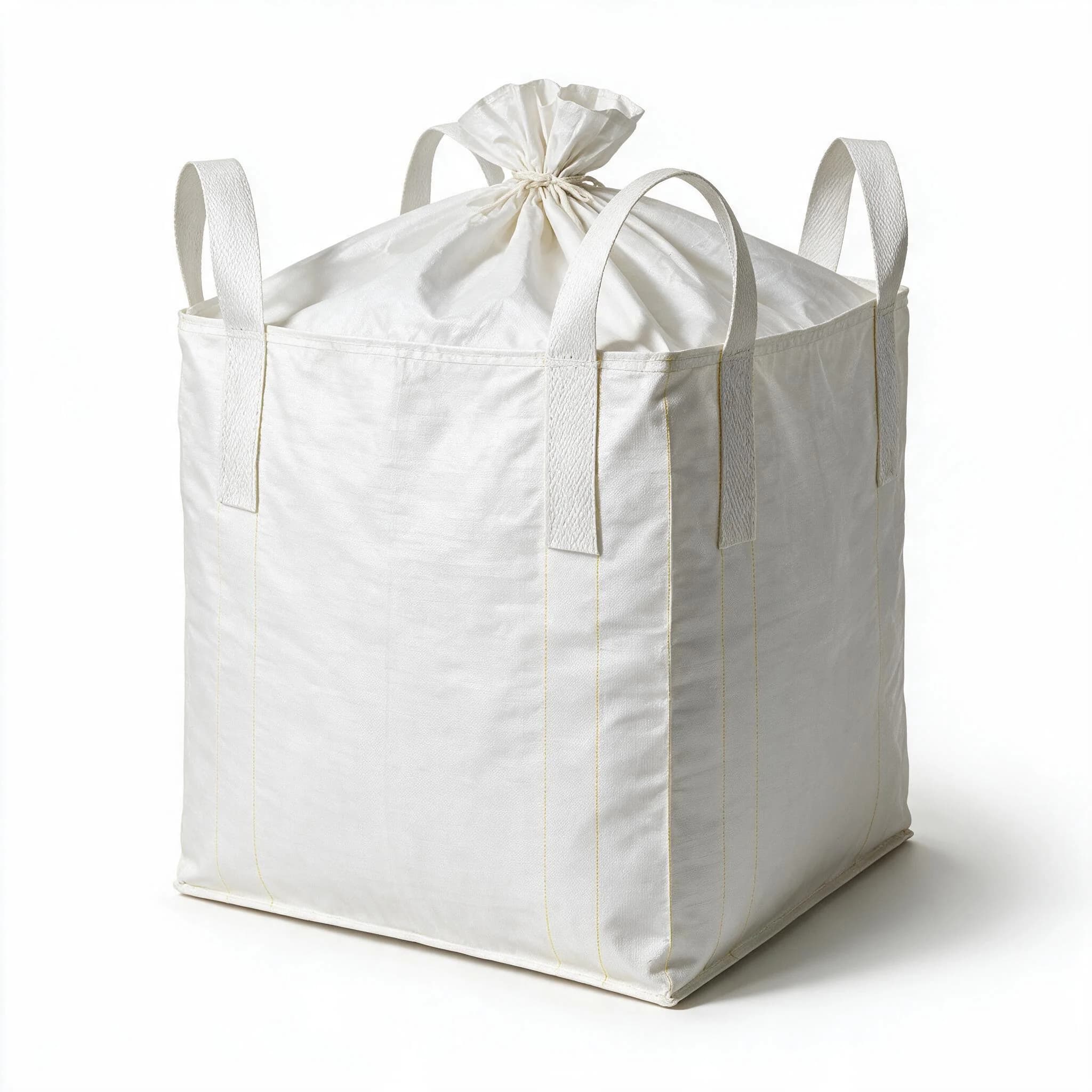
The short duffle sleeve connects to a fixed filling head, so filling is contained and dust stays inside the bag. Once filled, the sleeve ties shut for a clean, closed top before the bag is handled.


Classic Structure
StandardDuffle top · Flat bottom
Classic Structure
A duffle top is a short cylindrical sleeve at the top of the bag, cinched shut with a tie or cord. Material is loaded through a filling head connected to the sleeve, then the sleeve is tied closed — keeping dust inside and the filled bag clean. Combined with a flat bottom, the bag stands level on a pallet and stacks square, which makes this one of the most storage-friendly classic structures.
01
The short duffle sleeve connects to a fixed filling head, so filling is contained and dust stays inside the bag. Once filled, the sleeve ties shut for a clean, closed top before the bag is handled.
02
A flat bottom stands level on a pallet or floor and stacks square in storage. The level base suits palletised transport and warehouse stacking, and the bag is discharged by cutting or tipping.
03
Powders and fine granules — flour, sugar, chemical powders, cement and similar materials where dust containment and clean filling matter. The contained filling makes it a strong fit for fine, dusty products; for very cohesive powders, the discharge method should be confirmed as well.
Handling Advantages
Filling through the duffle sleeve from a fixed filling head keeps dust inside the bag and the filling area cleaner. The sleeve accepts most standard filling heads with minimal adjustment.
Discharge is by cutting the bag open or tipping it. Simple and economical for one-way emptying; if the product must be emptied into a hopper or conveyor, a discharge-spout bottom is usually preferred.
The flat, level base stacks square on pallets and in warehouses, and the closed duffle top keeps the filled bag tidy through transit. This is one of the best structures for palletised and high-stack storage.
Duffle Top / Flat Bottom FIBC
The specifications shown are typical configurations. Final specifications should be confirmed according to the packed material, bulk density, filling method, handling method and transportation conditions.
Material Guide
Six practical examples selected around the bag opening, discharge method and common African mining, construction, agricultural and industrial supply chains.
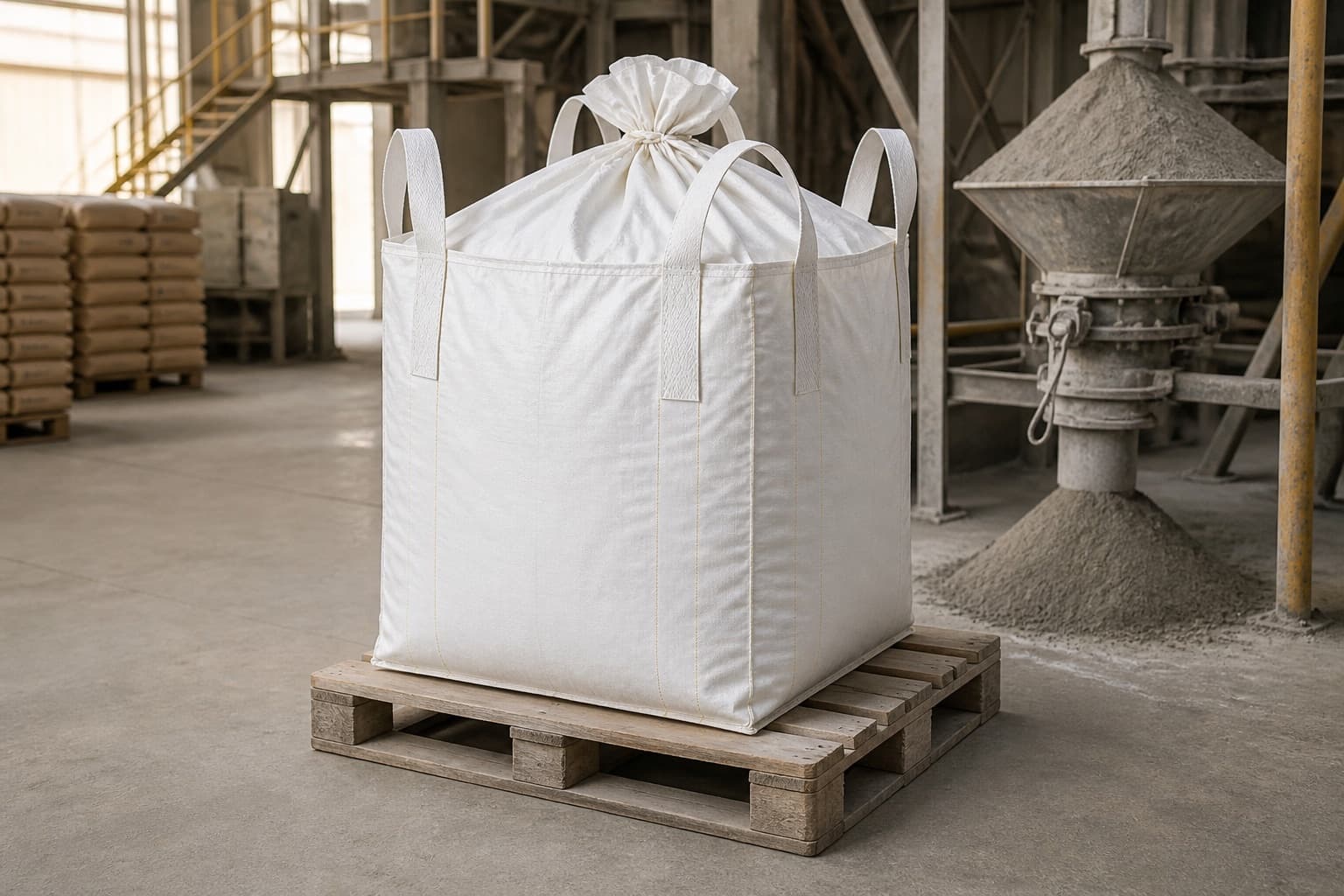
The wide sleeve reduces the exposed filling area and can be tied closed for transport. A flat bottom suits one-way discharge by cutting or tipping.
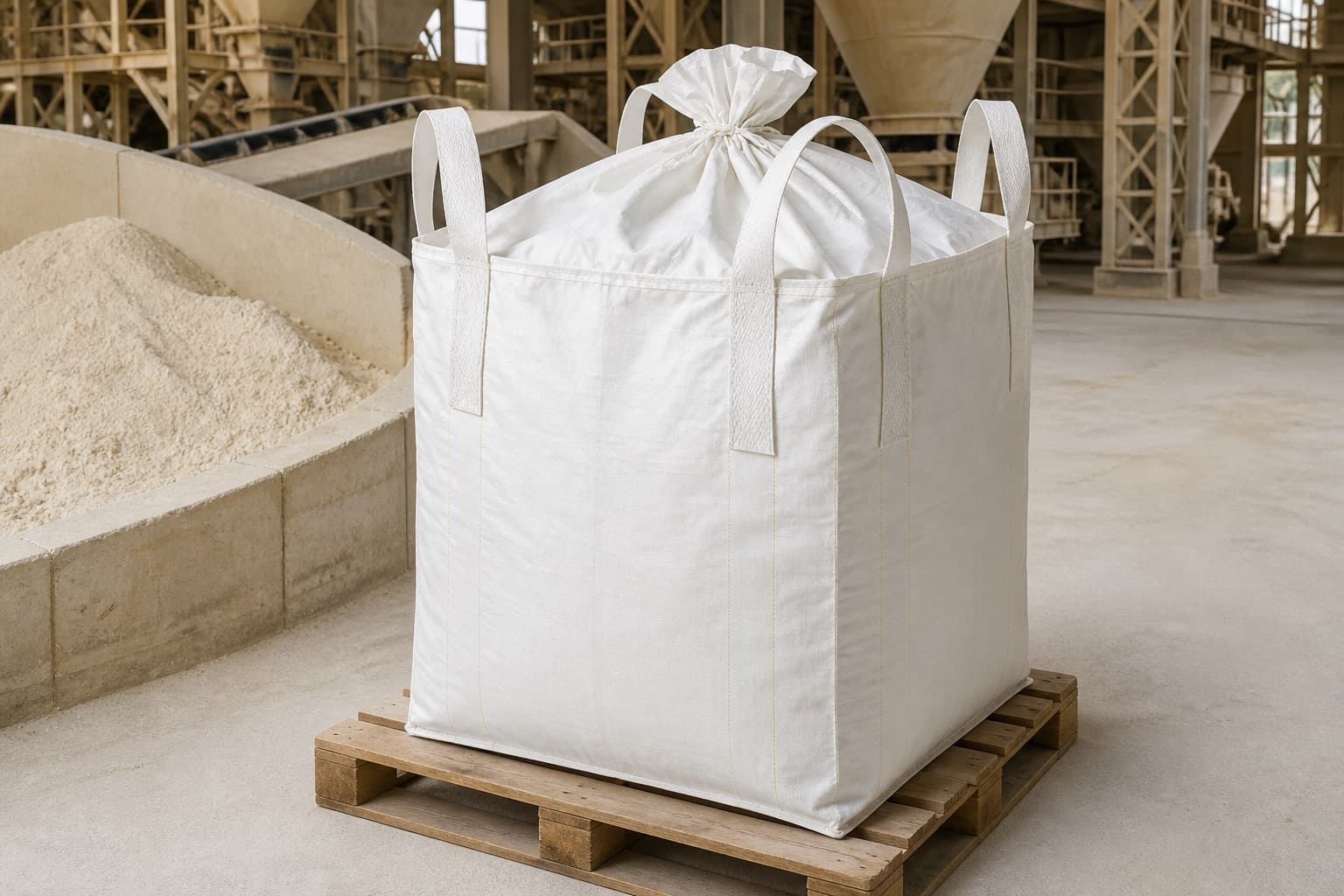
A wide closable sleeve accommodates common filling arrangements for mineral powder, while the flat base supports stable pallet storage.
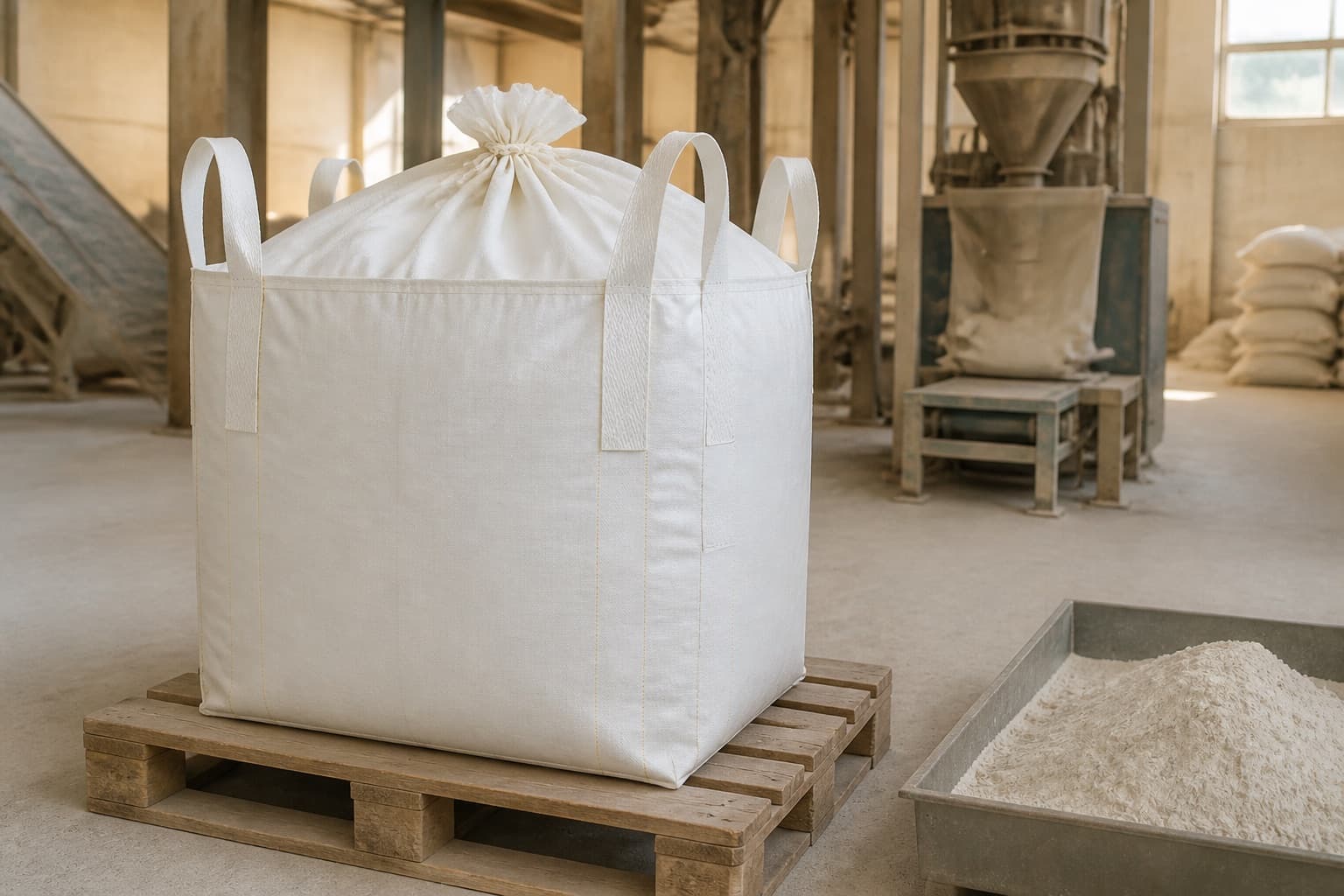
Gypsum powder can be filled through the generous sleeve and secured for transport when controlled bottom discharge is not required.
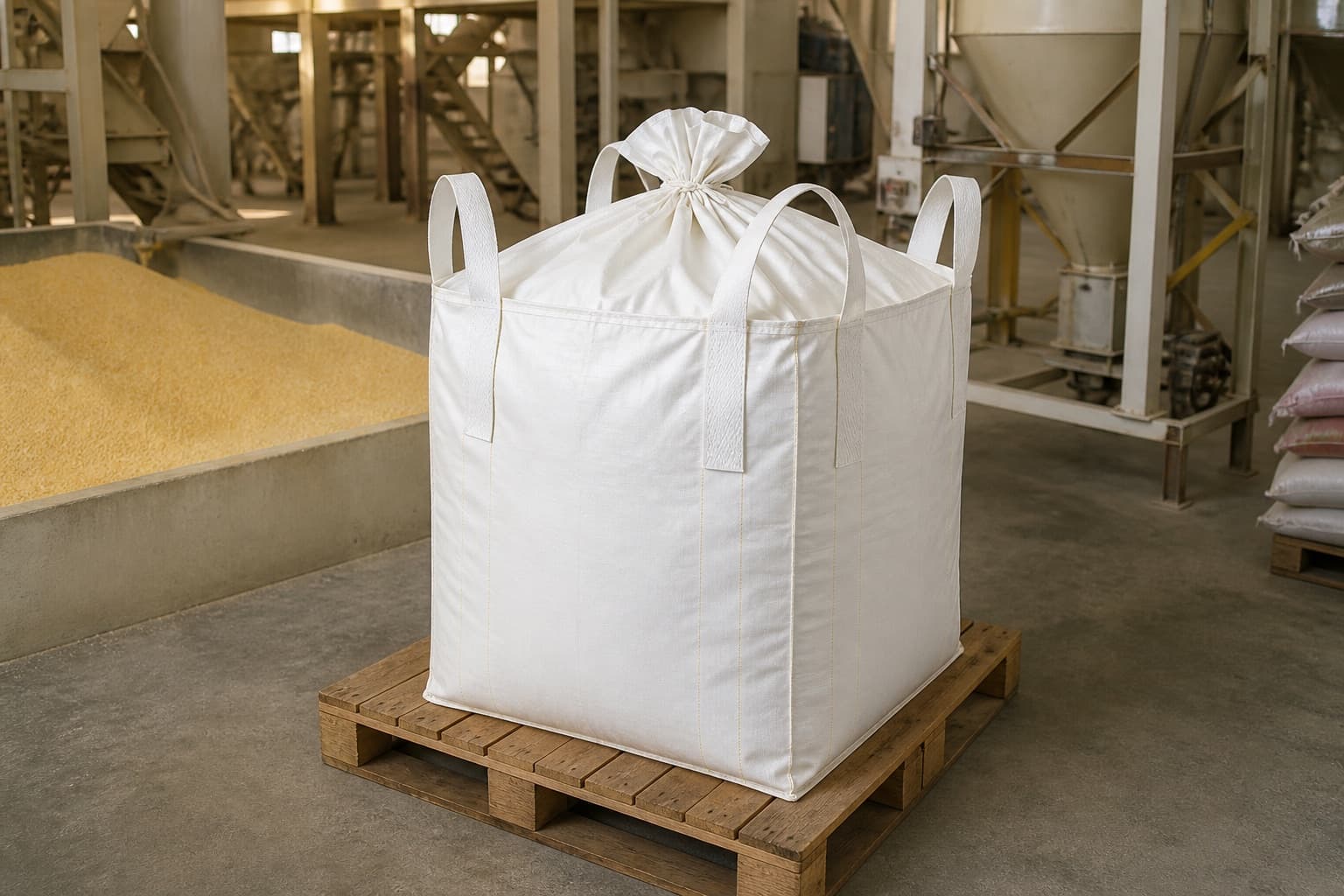
The closable sleeve offers more containment than a fully open top, while the flat base is practical for palletized ingredient transport.
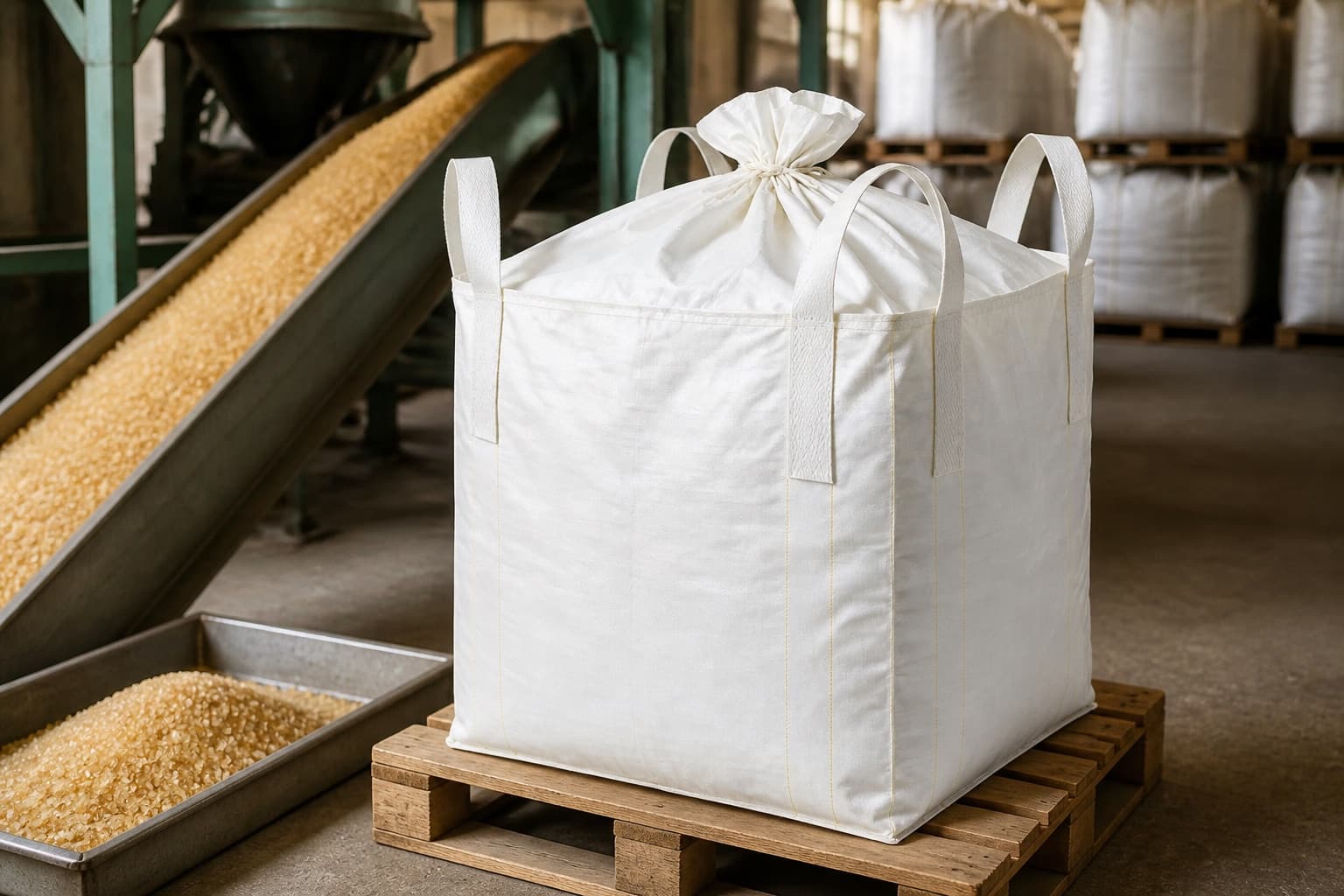
Raw sugar crystals can be filled through a wide sleeve and enclosed for storage. Food-contact construction and moisture protection should be specified.
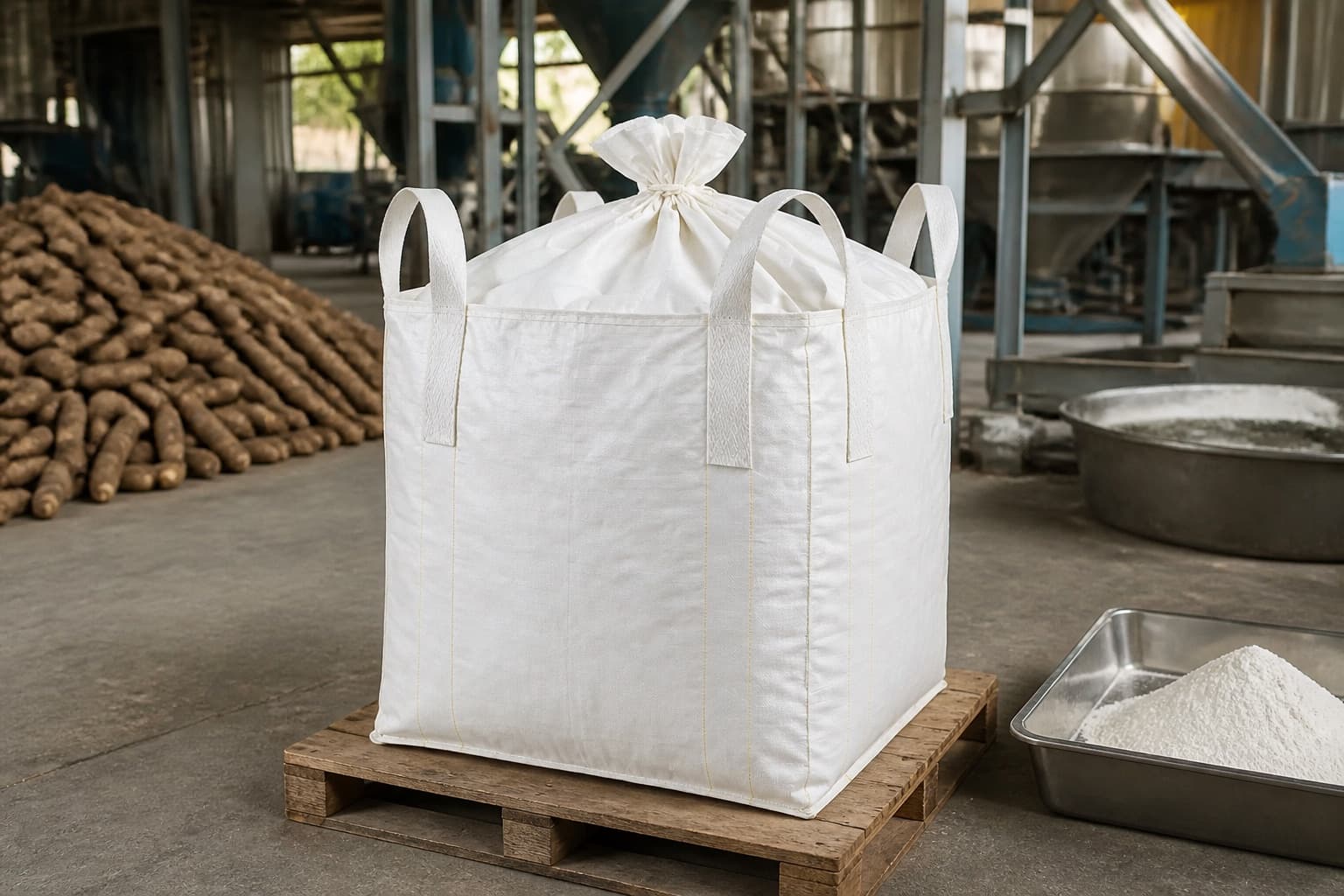
The wide sleeve supports flexible filling access for cassava starch and can be tied securely before palletized shipment.
A duffled filling spout on a flat bottom — clean to fill, stable to stack and store.