

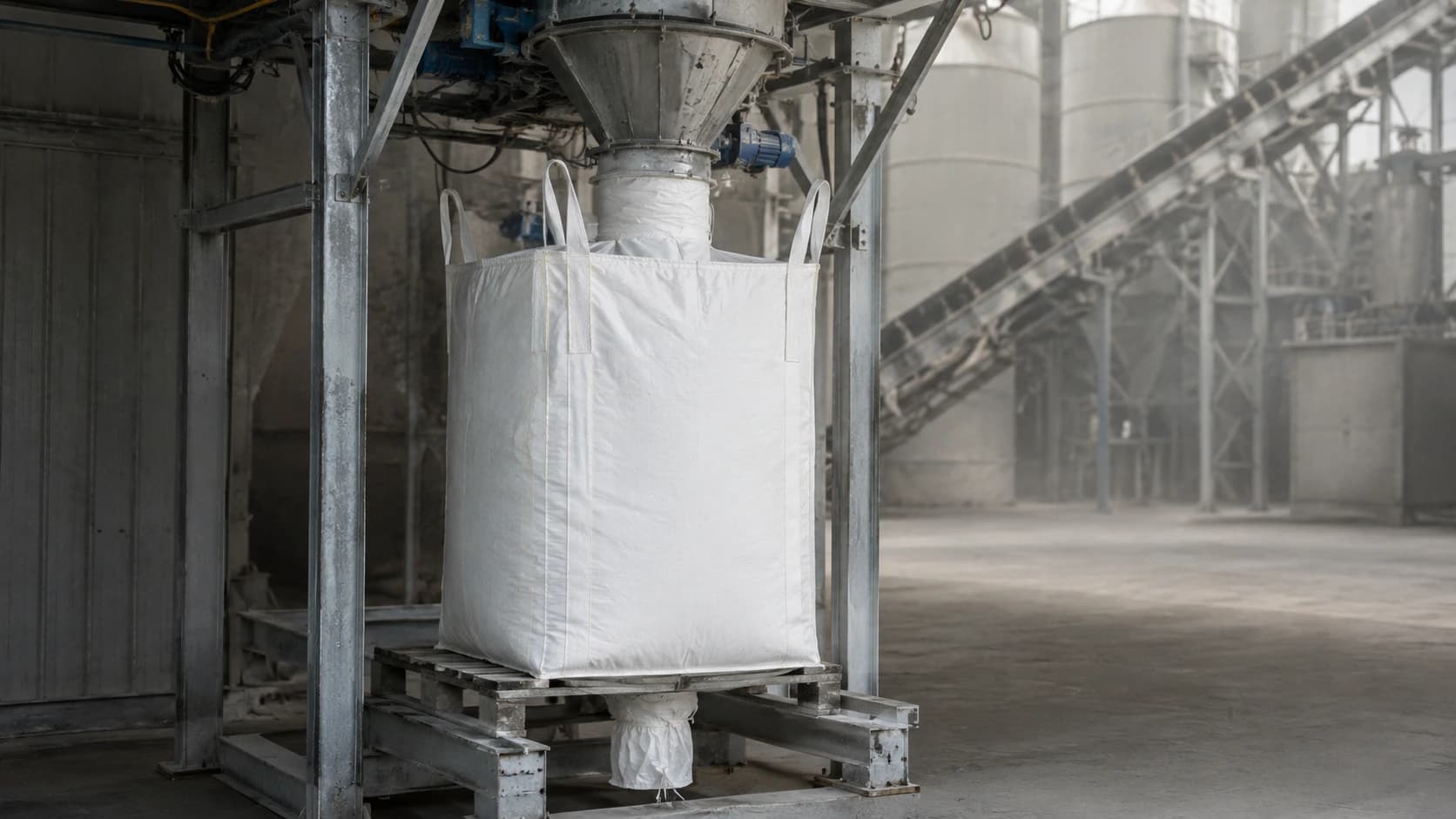
Construction powder
1000 kg140–170 gsmCement
Cement
Design around moisture protection and clean transfer
A fine, moisture-sensitive construction powder that benefits from dust-tight FIBC bags and liner protection.
Cement is a fine construction powder that is normally handled through silos, filling heads and enclosed receiving systems. Its bulk density and flow behaviour depend on the product and process, while exposure to moisture can affect the condition of the packed material.
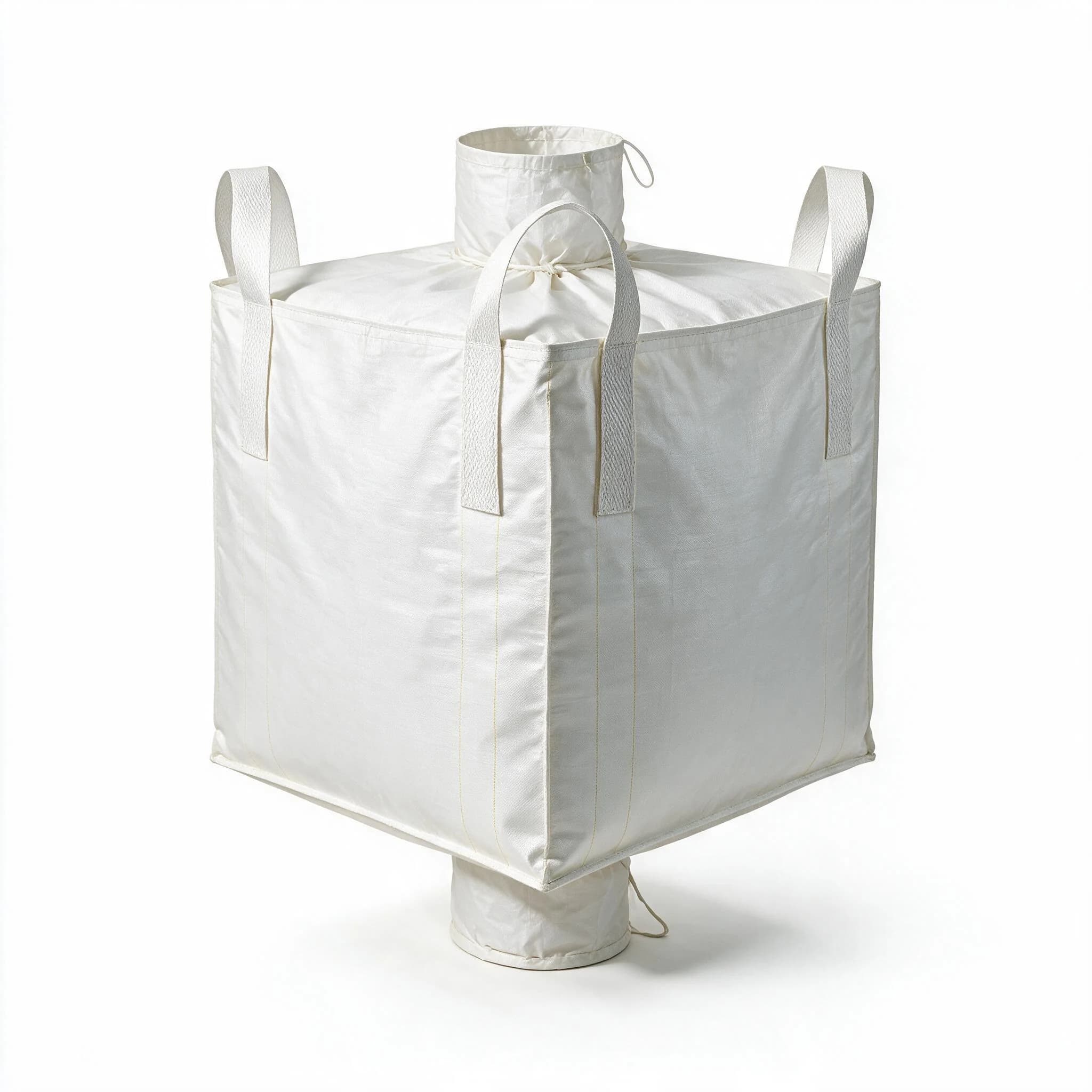
The most visible handling issue is dust at open transfer points. A top spout sized to the filling head and a bottom spout matched to the receiving connection help turn the bag into a defined part of the process rather than an open intermediate step.
Packaging protection must also follow the logistics route. Fabric coating, seam construction, liner choice and closure details should be reviewed together with storage duration, weather exposure and the way the customer empties the bag.
Fine airborne dust
Filling and discharge can release fine powder, so equipment connections, seams and closure details influence site cleanliness.
Moisture-sensitive product
Storage and transport exposure determine whether coated fabric, a PE liner and additional closure protection are appropriate.
Process-dependent flow
Cement generally transfers well when dry, but outlet size, aeration and receiving equipment still influence discharge performance.
Cement
Recommended FIBC Configuration
This configuration combines a defined filling connection, controlled discharge and optional moisture protection. The production specification should still be confirmed against the cement grade, target fill weight and complete storage and delivery route.
- Recommended SWL
- 1000 kg
- Fabric GSM
- Approx. 140–170 gsm (confirm against actual bulk density)
- Top
- Filling spout / Duffle top
- Bottom
- Discharge spout
- Lifting
- 4 loop / 2 loop
- Liner Recommendation
- PE liner commonly recommended for moisture protection
Why This Configuration
The top connects to the filling head
A correctly sized filling spout supports enclosed transfer from the silo or packer and helps reduce open dust release.
The outlet supports clean receiving
A discharge spout provides a controlled path into a hopper or downstream process and can be sized to the receiving connection.
The liner protects the route
A PE liner is commonly considered for moisture protection, but its thickness, fit and closure should follow the actual exposure and discharge method.
Cement
Key Considerations
The final bag is determined as much by the site and route as by the cement itself. Confirm these four areas before sample approval.
Cement and target weight
Provide the cement grade, bulk density, temperature where relevant, target net weight and required bag dimensions.
Filling equipment
Confirm filling-head diameter, clamping method, filling rate, bag support and dust-collection interface.
Moisture exposure
Define warehouse conditions, outdoor handling, transport duration and weather exposure before selecting liner and coating.
Receiving process
Match the discharge-spout diameter and closure method to the hopper, flow-control requirement and operator procedure.
Cement
Recommended Products
Both recommended structures provide controlled discharge. The choice between a filling spout and a wider duffle top depends on the packer connection, required access and dust-control method.

Related Guides
Guides about this material
These guides compare liners, top structures and the wider bag-selection process so the cement specification can be checked as one complete system.
 FIBC Guide
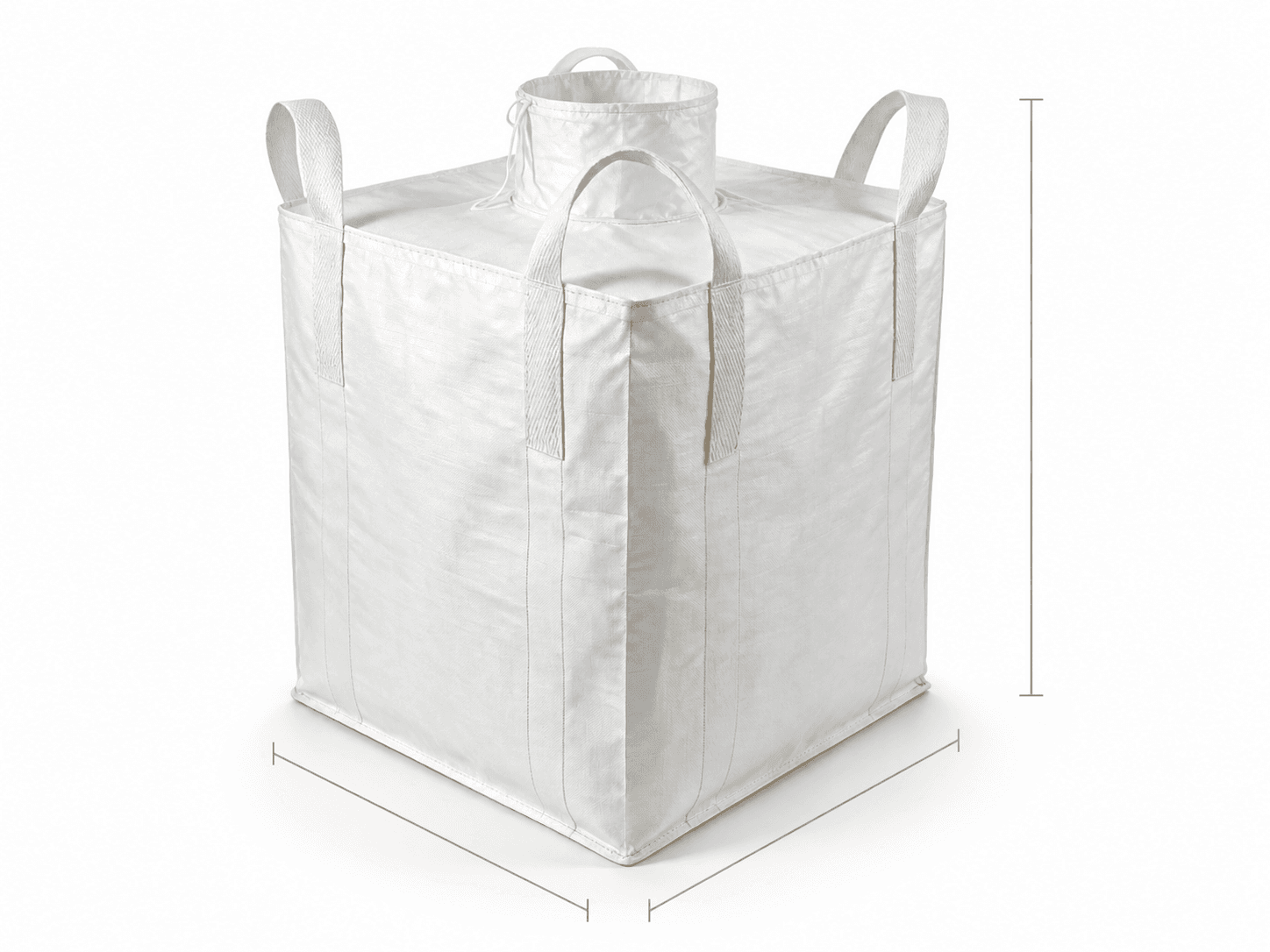
FIBC Bag Size and Volume Guide
How FIBC size is described, why nominal volume differs from the volume you actually get, and how bulk density links bag volume to the weight you can load.
 FIBC Handling
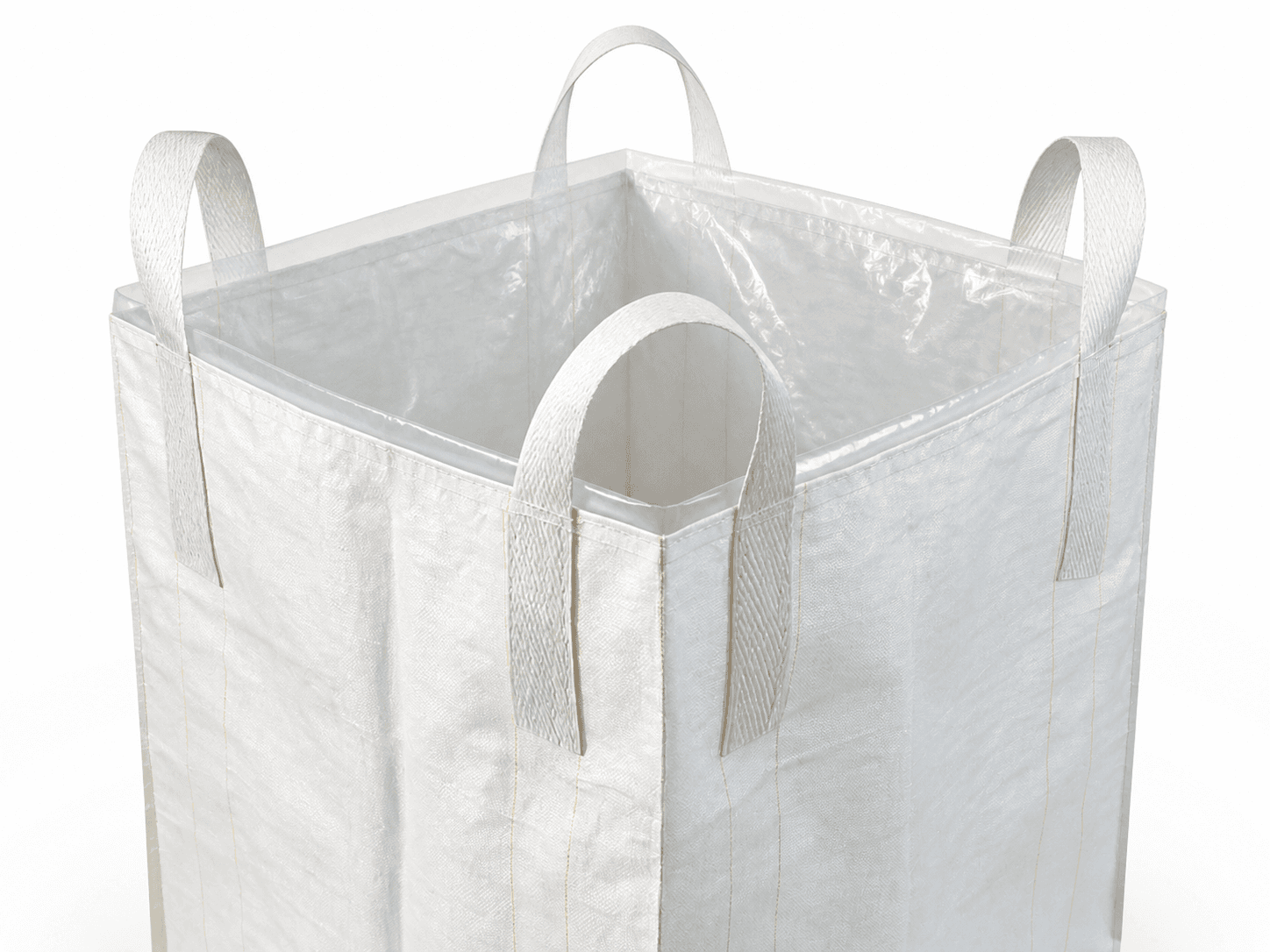
When Does an FIBC Need a PE Liner?
How to judge whether a FIBC should have a polyethylene liner — the products and conditions where a liner can help with moisture, fine powders and contamination, and the cases where it may not be needed.
 FIBC Design
FIBC Bottom Types: Flat Bottom vs Discharge Spout
How flat bottom and discharge spout FIBCs differ, and how to choose based on how the bag is emptied, how often it is reused and how the material behaves.