01
The top
The straight filling spout accepts most filling lines and can be connected for a sealed fill. The longer spout gives the filling head a clear target and keeps the fill contained.


Classic Structure
StandardFilling spout · Flat bottom
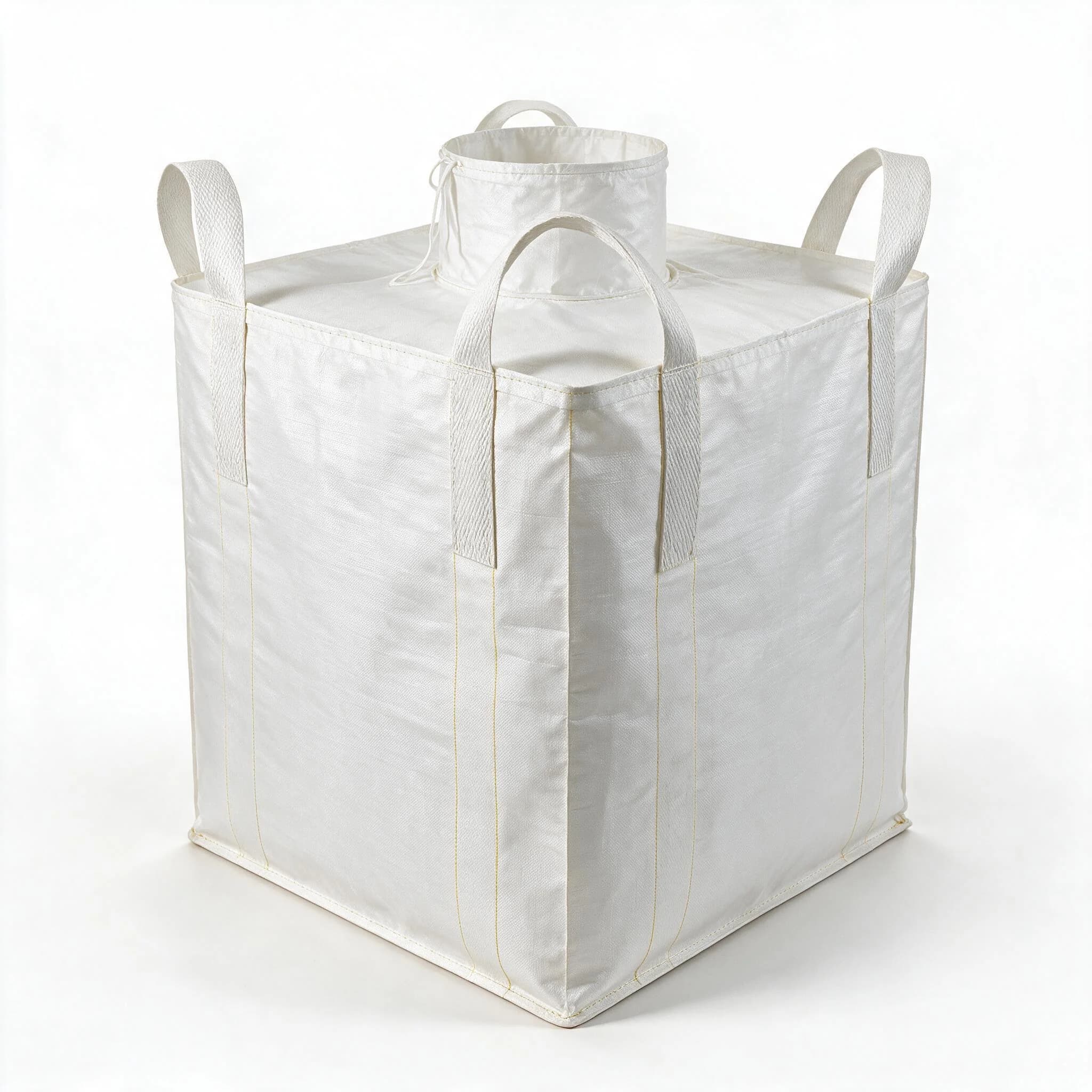
Classic Structure
A filling spout is a longer, straight tubular opening at the top of the bag, typically filled through a sealed connection from a filling head or hopper. It suits automatic filling lines and powder-and-granule flows where the spout is held in place during loading. Combined with a flat bottom, the bag stands level and stacks square, keeping the structure strong, stackable and economical.
01
The straight filling spout accepts most filling lines and can be connected for a sealed fill. The longer spout gives the filling head a clear target and keeps the fill contained.
02
The flat bottom stands level on a pallet or floor and stacks square in storage. The rigid level base suits palletised transport, and the bag is discharged by cutting or tipping.
03
Granular and lump materials that benefit from a rigid, level base and a defined filling point — pellets, granules, aggregates, sand and similar free-flowing bulk. For very fine powders, a duffle or discharge-spout combination is usually preferred.
Handling Advantages
The straight spout accepts most filling lines and connects cleanly for a sealed fill. It suits automatic filling systems where the spout is positioned under the head and held during loading.
Discharge is by cutting the bag open or tipping it. Simple and economical for one-way emptying; for controlled or repeated discharge, a discharge-spout bottom is usually preferred.
The flat, level base stacks square on pallets and in warehouses, and the filled spout ties flat against the bag. A strong, stable structure for palletised transport and storage.
Filling Spout / Flat Bottom FIBC
The specifications shown are typical configurations. Final specifications should be confirmed according to the packed material, bulk density, filling method, handling method and transportation conditions.
Material Guide
Six practical examples selected around the bag opening, discharge method and common African mining, construction, agricultural and industrial supply chains.
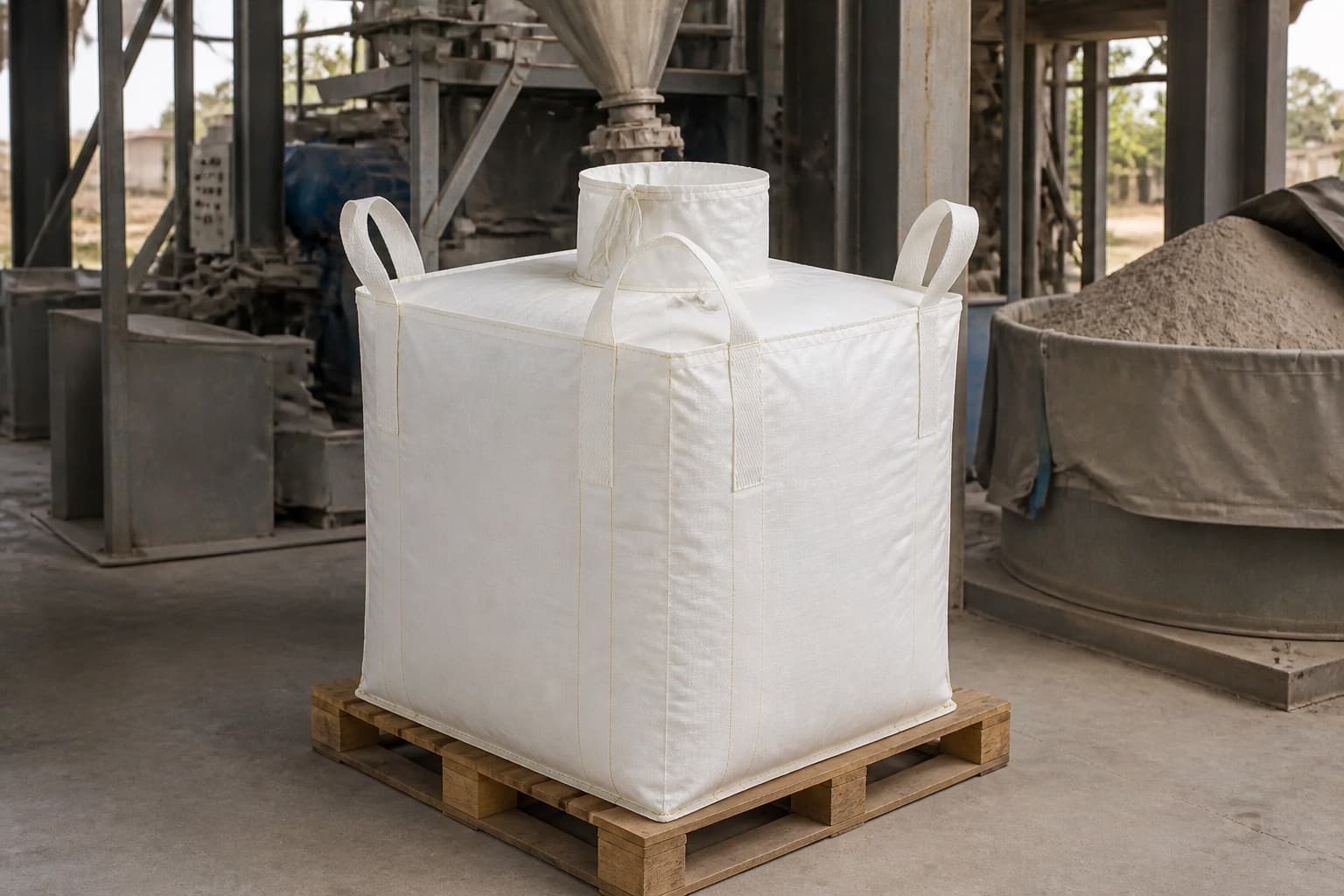
A defined filling-spout connection helps contain cement during packing, while the flat base supports stable one-way shipment.
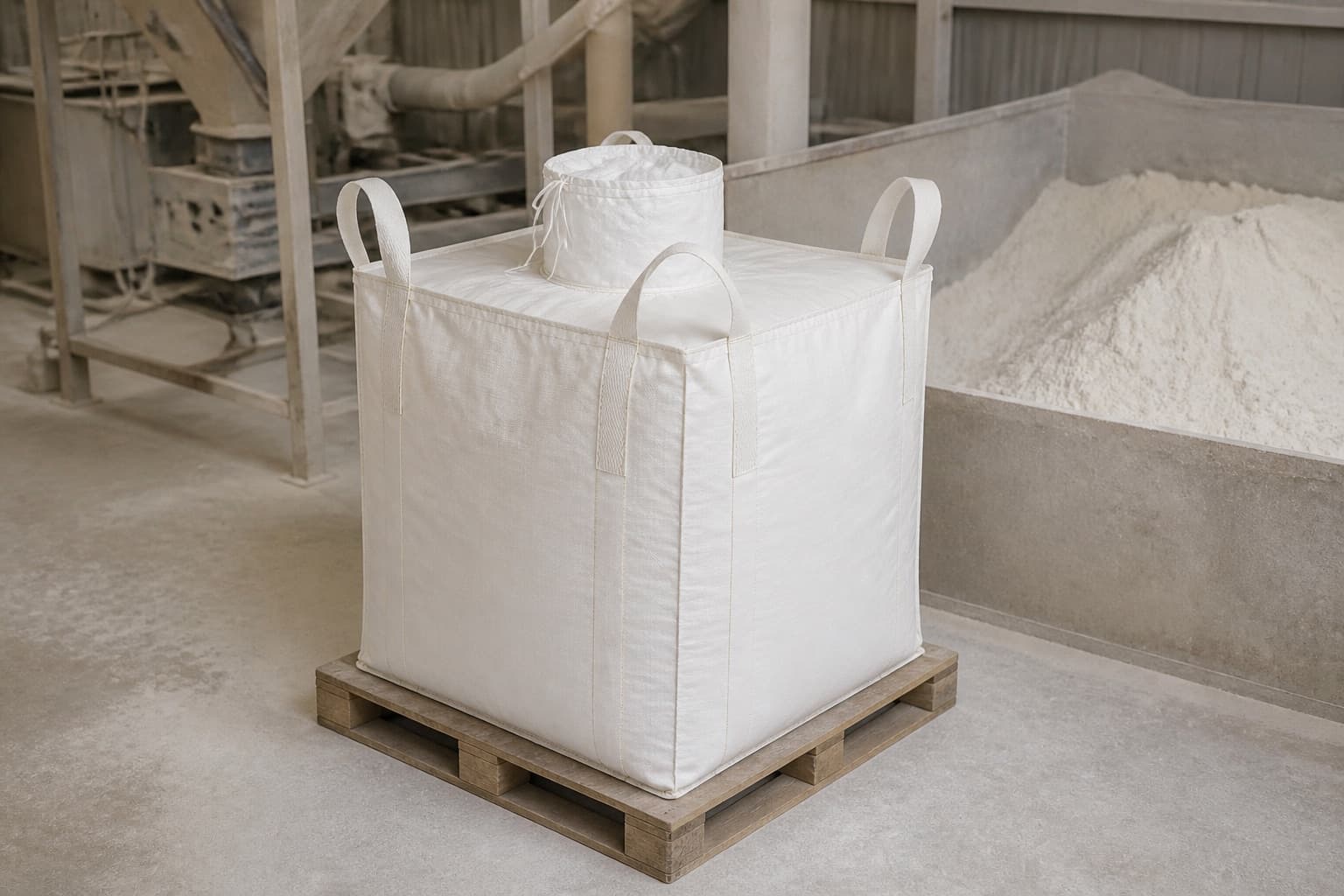
Fine hydrated lime benefits from an enclosed filling connection. Liner and seam choices should follow moisture and dust requirements.
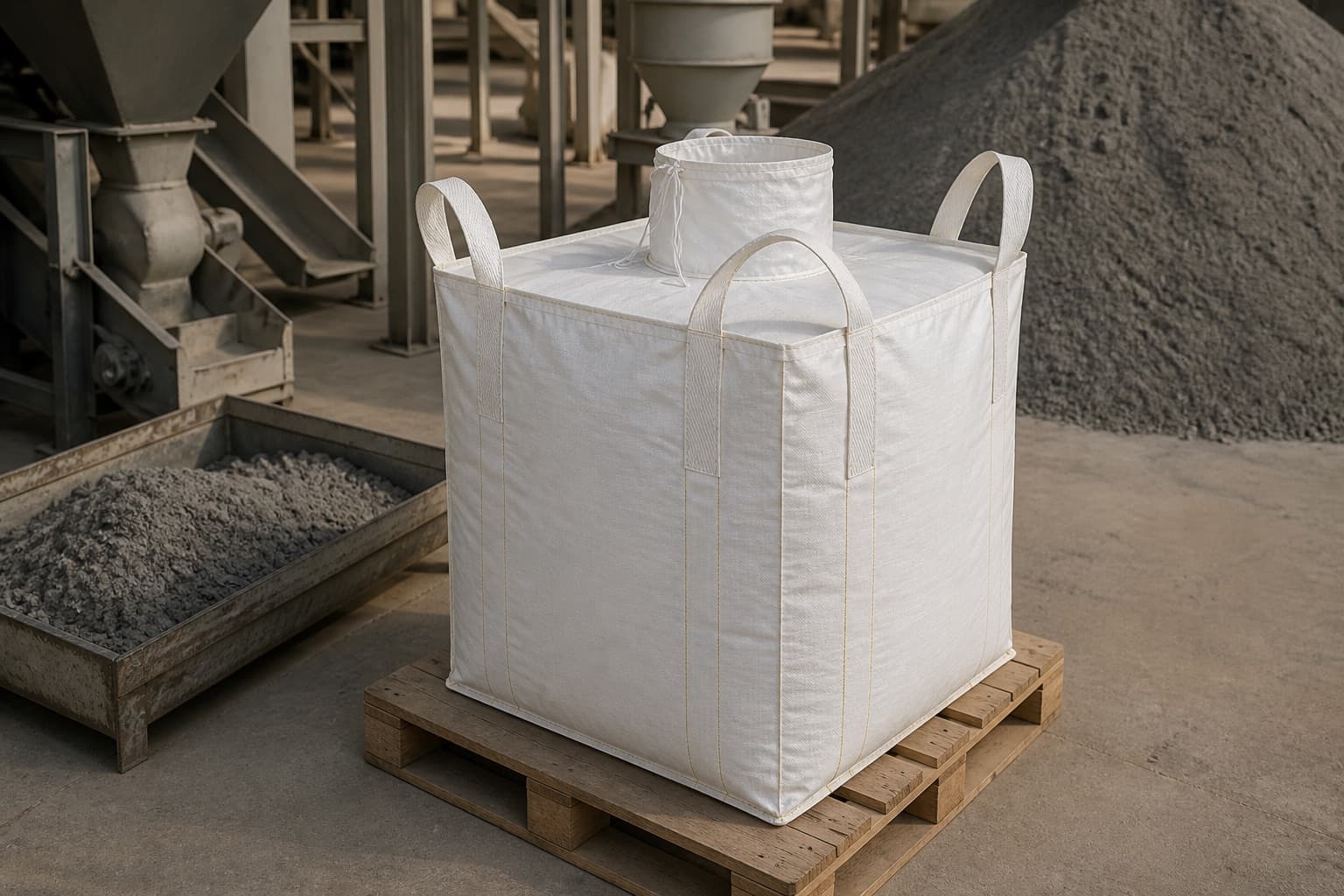
The filling spout matches pneumatic or gravity-fed lines for fly ash, and the flat base is practical where bottom discharge is unnecessary.
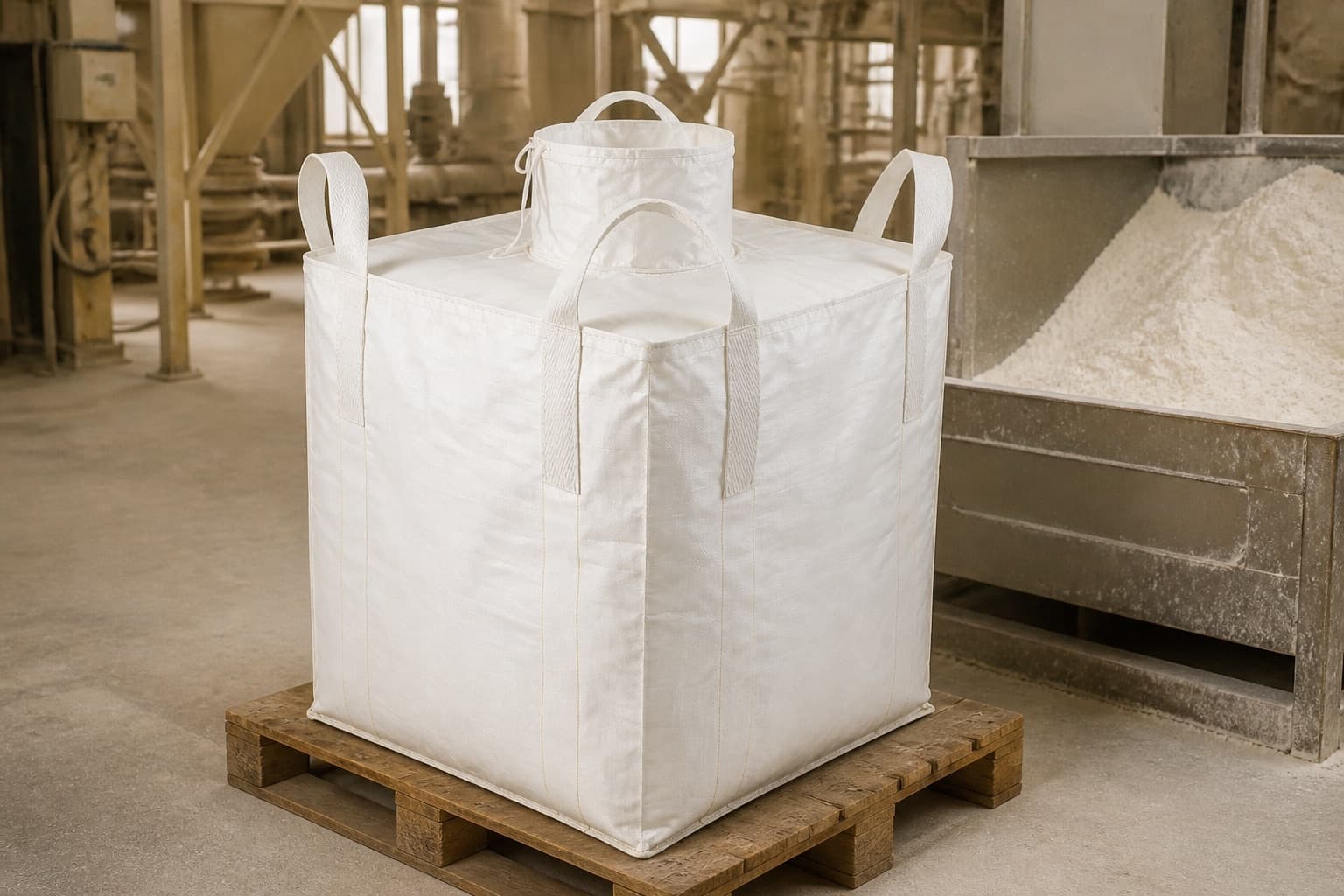
A controlled inlet helps protect fine kaolin from open handling, with optional liner protection selected for the required cleanliness and moisture barrier.
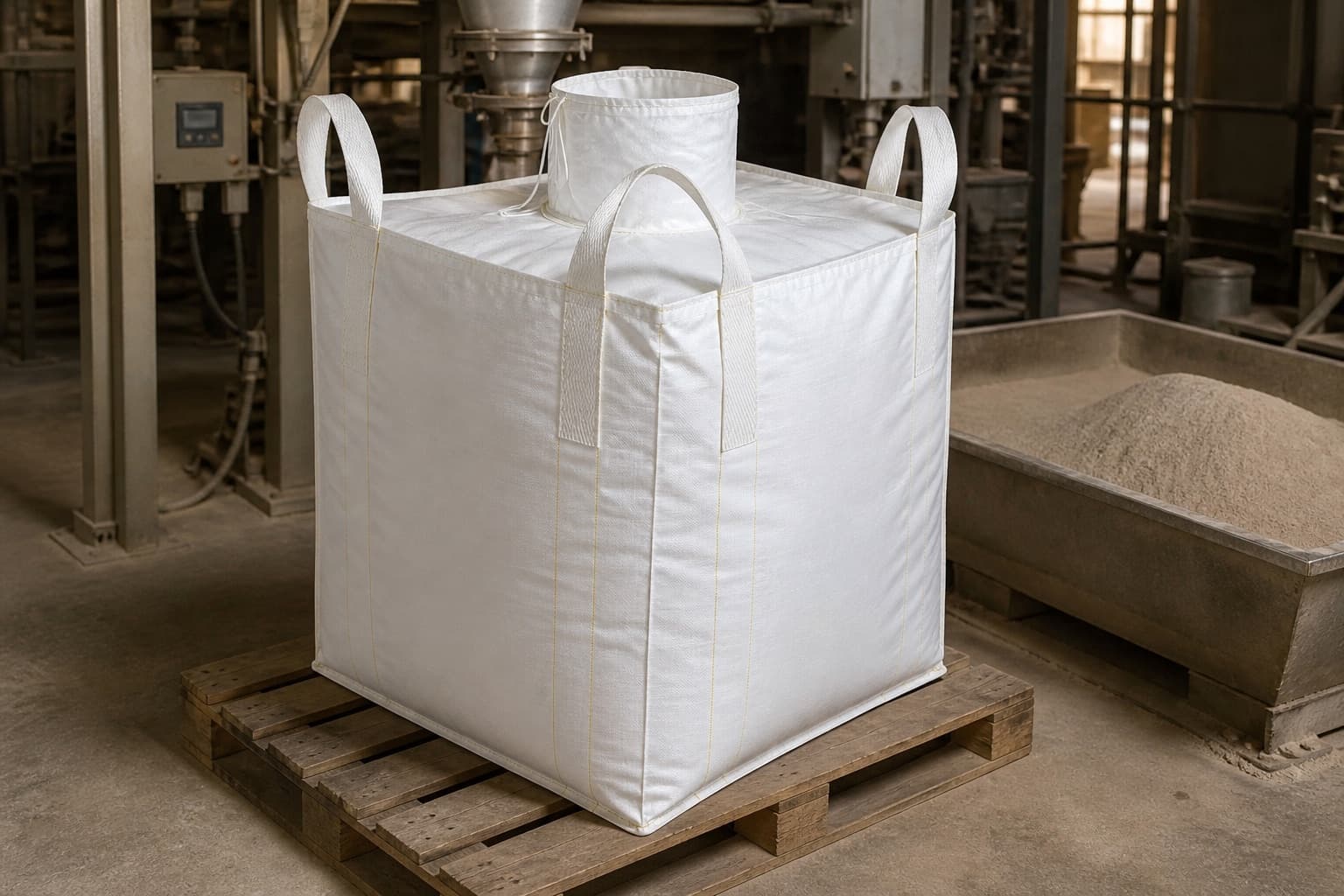
Bentonite can connect directly to a filling head through the inlet spout, then travel on a stable flat base for one-way use.
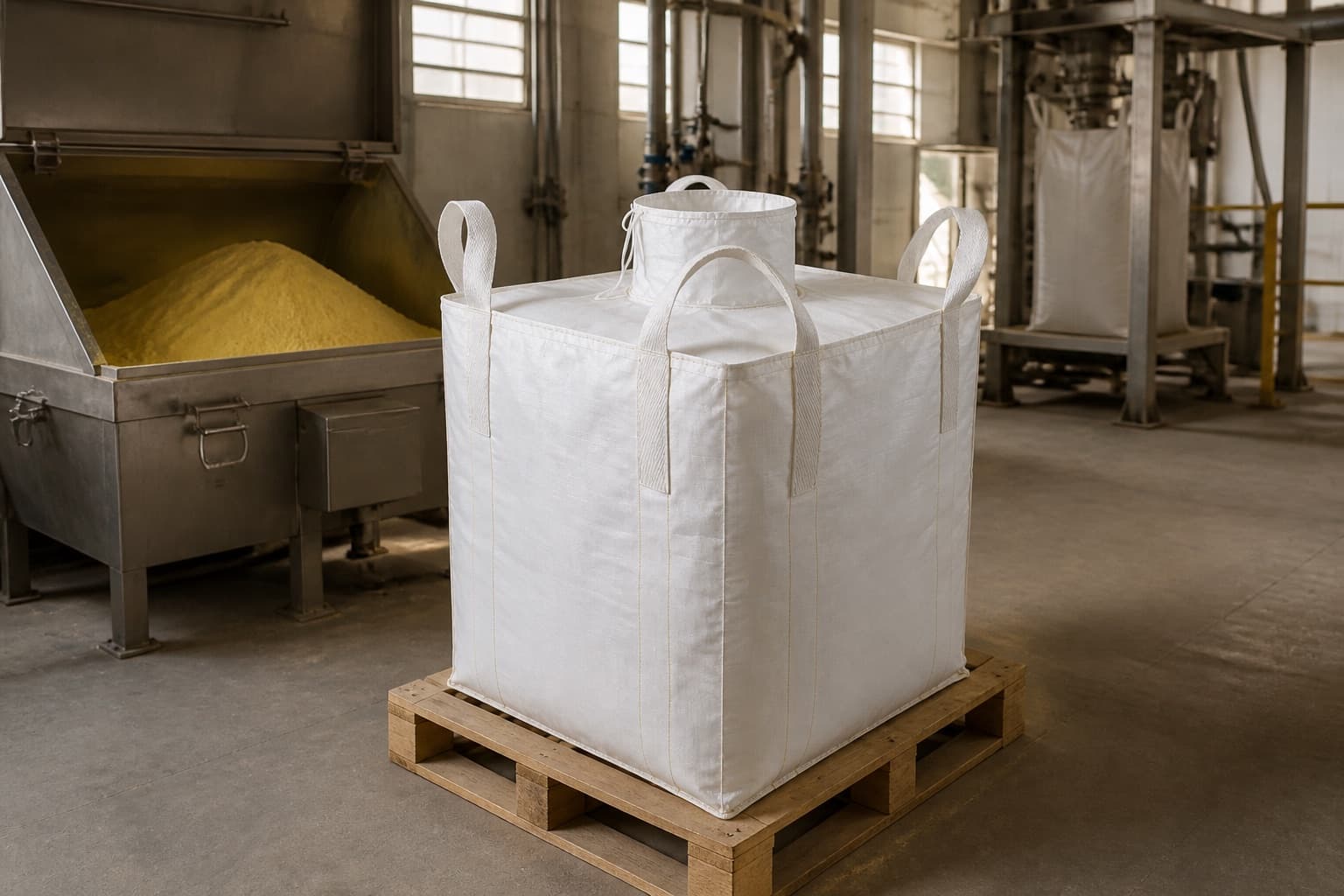
The defined inlet reduces open transfer around sulphur powder. Final fabric, liner and static-control measures require a material-specific safety review.
A straight filling spout on a flat, stable bottom — strong, stackable and economical.