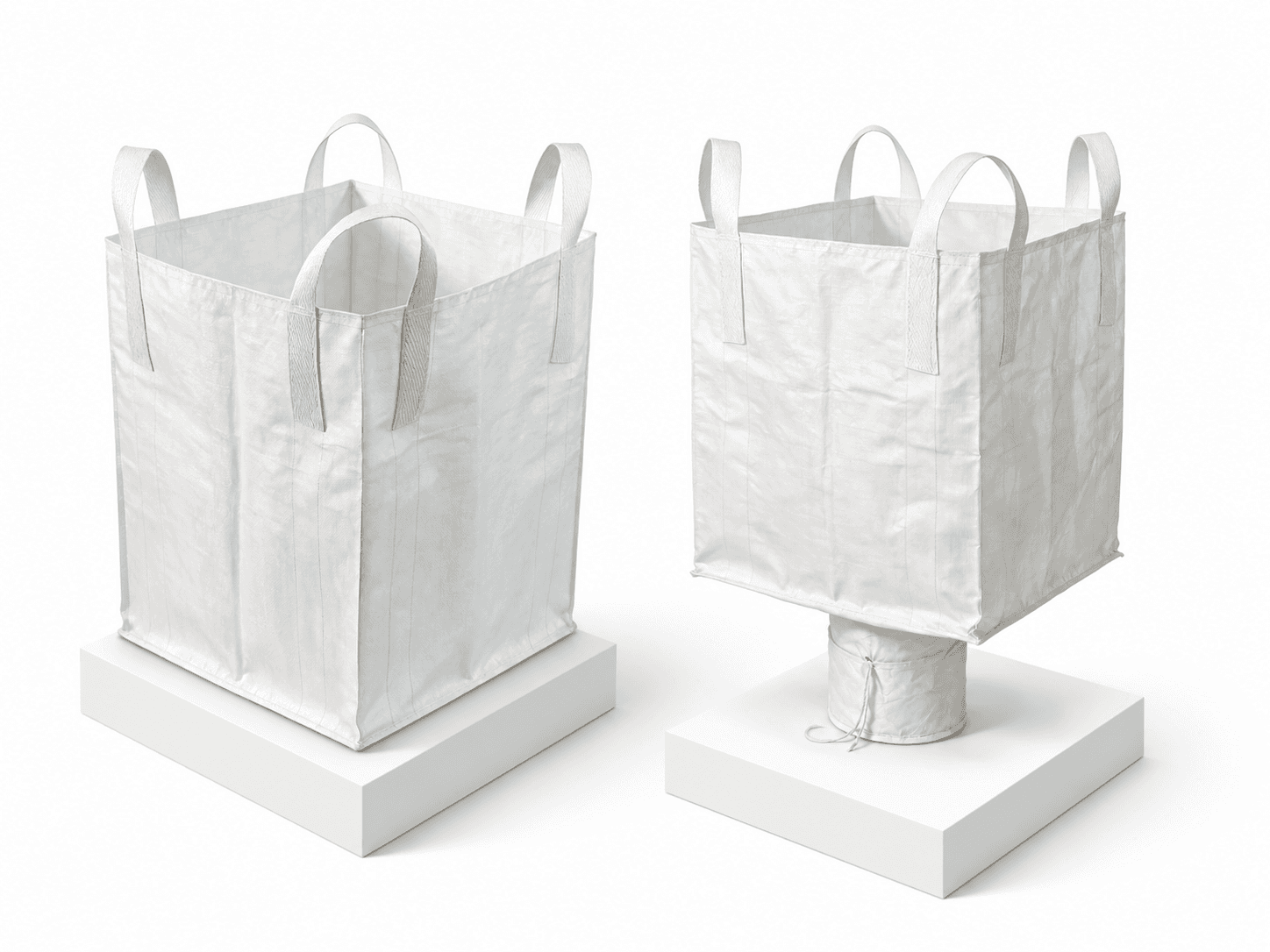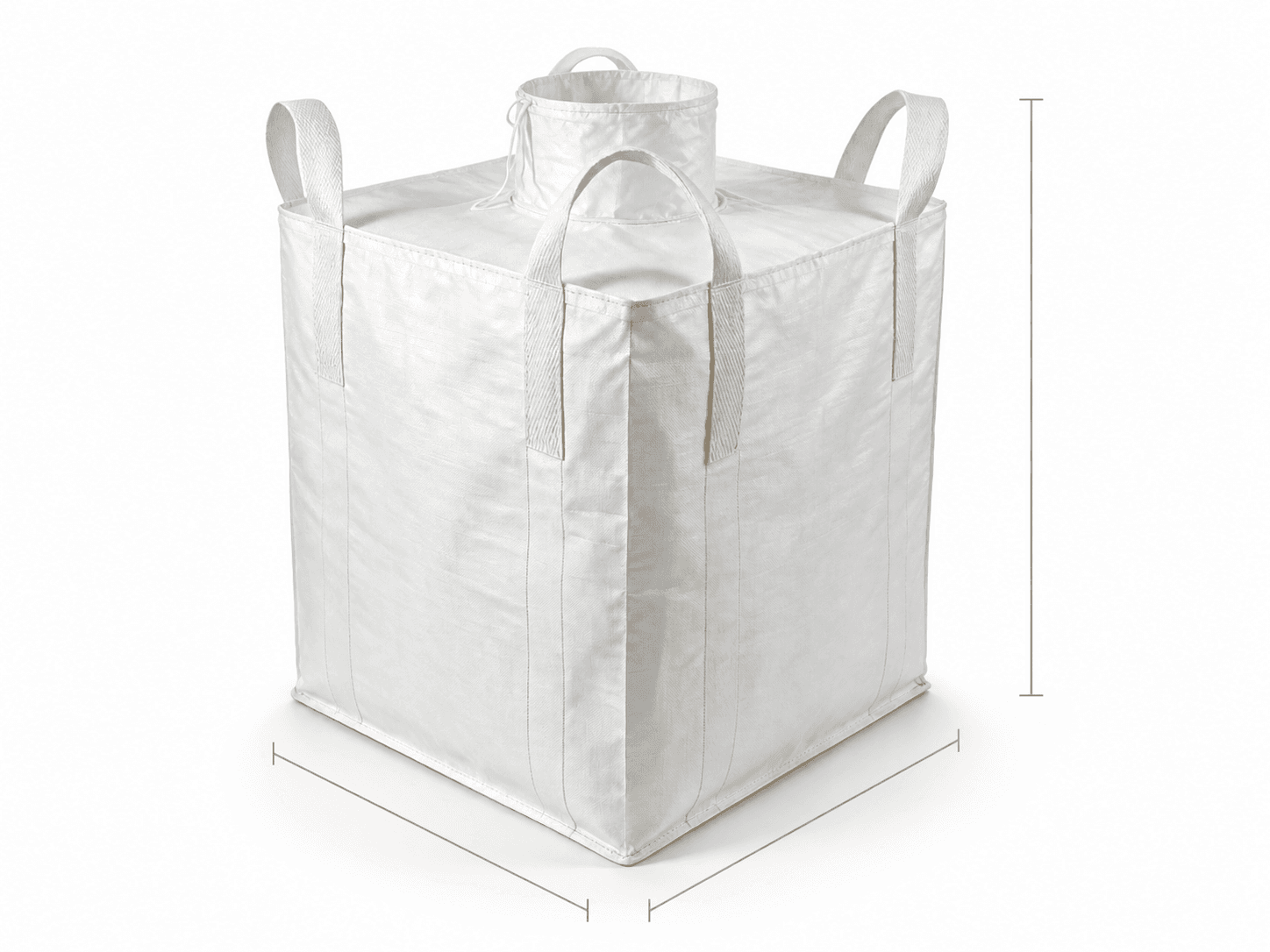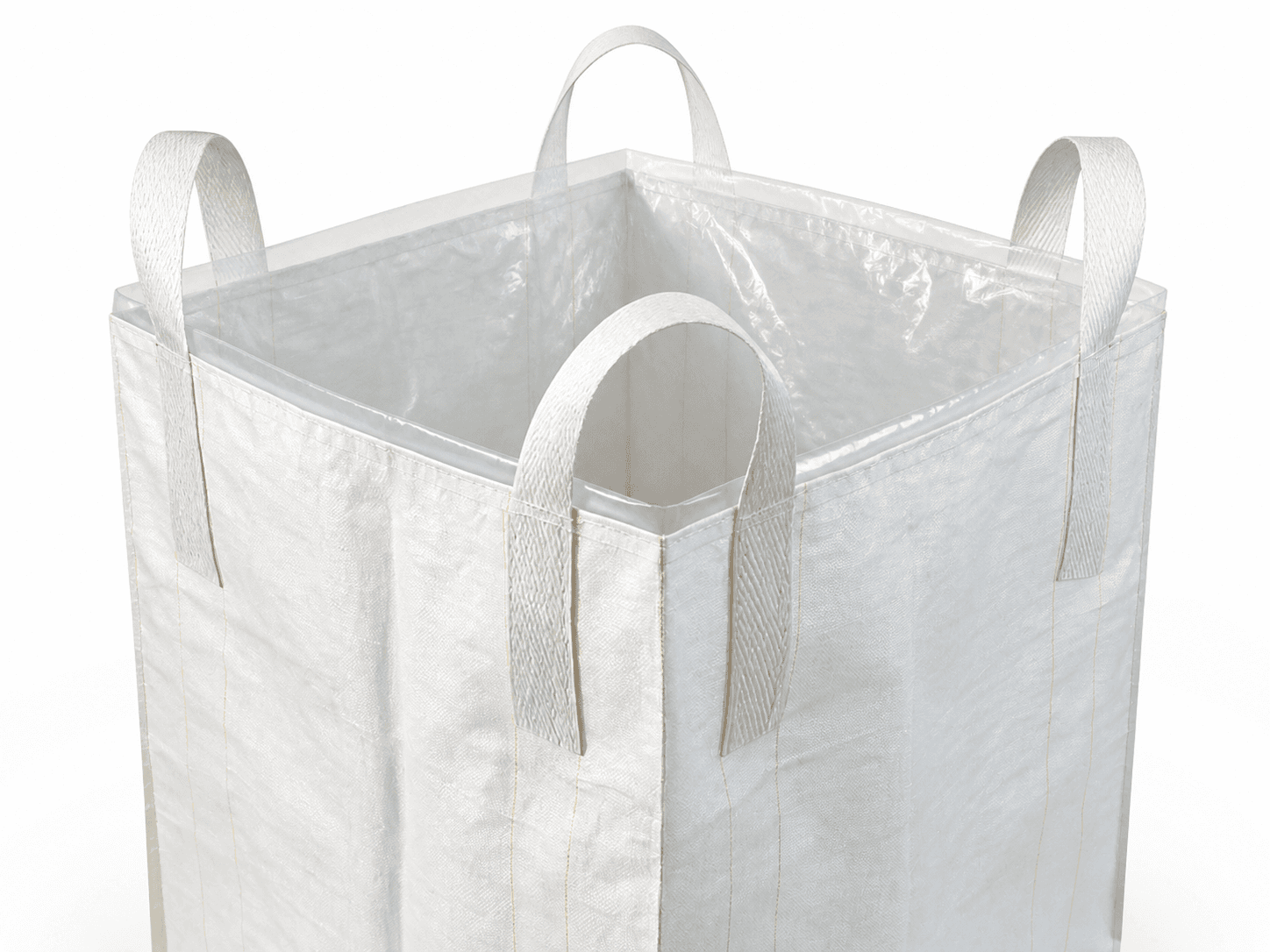
The top of a FIBC is where the bag meets the filling process, so its design has a direct effect on how quickly, cleanly and safely the bag is filled. Three configurations are common — open top, duffle top and filling spout — and each one suits a different kind of filling operation.
This guide compares the three options and explains the practical factors behind the choice: the filling method you use, how much dust containment you need, and the product you are packing.
Why the top of the bag matters
The top of the bag does more than keep the contents inside. It controls how the bag is filled, how it is closed, and how much of the product and the surrounding air are exposed during filling.
For products that are free-flowing and harmless, an open, simple top is usually fine. For fine powders, products with strict hygiene requirements, or filling lines where dust must be contained, a more sealed configuration earns its place. The trade-off is between simplicity and control — and neither choice is wrong without context.
Open top
An open top FIBC is exactly what the name suggests: the top of the bag is left open as a wide opening. Filling is done from above, usually by a filling head, chute or auger, and the bag is closed by tying the top fabric, folding it over, or stitching it shut.
The open top has clear advantages:
- Simple and fast to fill — no spout to align or connect.
- Easy to inspect — the inside of the bag is visible before and during filling.
- Simple to close — a tie or fold is all that is required.
- Flexible — works with almost any filling equipment.
Its limitation is containment. During filling, the opening is exposed, so fine dust can escape, and the product is in contact with the surrounding air. For coarse, granular or low-dust products filled in a controlled environment, an open top is often the most practical choice.
Duffle top
A duffle top has a short, cylindrical spout in the centre of the top panel. The bag is filled by connecting the spout to a filling head or by guiding a filling nozzle into it, and closed by tying the spout closed.
The duffle top is a middle ground between the fully open top and a sealed spout:
- More contained filling — the narrower opening keeps the product and dust closer to the filling point.
- Faster closing — tying one spout is quicker and cleaner than folding a wide opening.
- Fixed filling position — works well when the filling point is stationary and the bag is positioned underneath it.
Duffle tops are commonly seen with products such as cement and other fine materials, where a bit of extra containment at the filling point is useful without the complexity of a fully sealed system.
Filling spout
A filling spout is similar to a duffle top but generally longer, and it is designed to be connected to the filling equipment for a sealed fill. The spout slides over or into the filling outlet and is tied or clamped in place.
The filling spout offers the highest level of containment of the three:
- Sealed filling — the connection between the filling line and the bag is closed, so dust and product stay inside the system.
- Reduced spillage — product goes through the spout into the bag, not past the opening.
- Good for fine and dusty products — the main reason a filling spout is specified.
The cost is convenience: aligning and connecting a spout takes more time and care than filling an open top, and the spout must be handled correctly during closing.
Choosing by filling method and dust control
In practice the choice is driven by two questions:
How is the bag filled? A gravity chute, an auger or a pneumatic line each behave differently. If the filling point is fixed, a spout you can connect and tie is convenient. If the bag is filled from a mobile head or by hand, a wide open top is easier.
How much dust control is needed? For free-flowing, low-dust products, an open top is usually adequate. For fine powders, or in workplaces where dust must be minimised, a duffle top or filling spout makes the filling process cleaner and keeps more of the product in the bag.
There is no universal best option — only the option that matches your equipment and your product. This is why the top type should be decided together with the product details and the filling line, not in isolation.
Matching the top to the product
The top type interacts with the product and with the rest of the bag design:
- A fine, dusty product such as sulphur powder is easier to fill cleanly through a spout than through a fully open top. See our sulphur powder application for an example of a fine-powder handling context.
- A free-flowing granular product can usually be handled well with an open top.
- If the bag has a discharge spout on the bottom, a spout or duffle top on the top keeps the whole filling and emptying cycle consistent.
The top and bottom of the bag are two separate decisions, but they should be considered together — see our guide to FIBC bottom types for the other end of the bag.
Confirm with your supplier
Because the top type is so closely tied to your filling equipment, it is one of the details worth confirming rather than assuming. The right starting point is to describe how the bag will be filled — the type of filling head, the size of the outlet, the product and how much dust matters to you.
A product such as our open-top flat-bottom FIBC can be configured around your filling line. When you request a quote, including the filling method in your requirements gives the supplier what they need to recommend the right configuration.